
EPISODES / EP 13 ·
The Rear Seat
Newman's Own · Paul Newman
Color blindness kept Paul Newman out of the pilot's seat, so the Navy made him a torpedo-bomber radioman; decades later his homemade salad dressing became a company that gives away all its profits.
SERVICE U.S. Navy
Out now. About ten minutes.
THE LESSON / ED'S TAKE
If the job you wanted in uniform wasn't the one you got, you're in good company. The seat you end up in can still teach you how to build something that matters.
In this episode
- 0:00Intro
- 1:03The Service
- 3:00The Problem
- 3:51The Plan
- 4:52What Was at Stake
- 6:52How It Turned Out
Read the full transcript
In the spring of 1945, a twenty-year-old Navy radioman's unit was assigned to the aircraft carrier Bunker Hill. Then his pilot got an ear infection, and he and his pilot were held back. On May 11th, off Okinawa, two Japanese suicide planes hit the Bunker Hill. Three hundred ninety-six men died, according to Military Times, including men from his squadron. The radioman made it home. Decades later, he and a friend started a salad dressing company on a whim, and decided to give away every dollar of profit. His name was Paul Newman.
This is Mission to Markets, where every weekday we tell the true story of a company a veteran built. I'm Ed Parcaut. This episode is narrated with an AI version of my own voice, from a script I approved.
Why this show? I'm a Navy veteran who built businesses, and I kept finding out that companies I grew up with were built by people who'd served. Nobody tells you that part. So every weekday, we will.
The Service
Paul Leonard Newman was born on January 26th, 1925, in Cleveland Heights, Ohio, and grew up in Shaker Heights, according to the Case Western Reserve University Encyclopedia of Cleveland History. He finished high school in 1943, spent a short stretch at Ohio University, and joined the Navy.
Military Times says he enlisted on January 22nd, 1943, four days shy of his eighteenth birthday. He wanted to fly. The Navy sent him to Yale in its V-12 program, which put young enlistees through college classes to train them as officers. Then came the eye exam. Newman was color blind. That ended his shot at being a pilot.
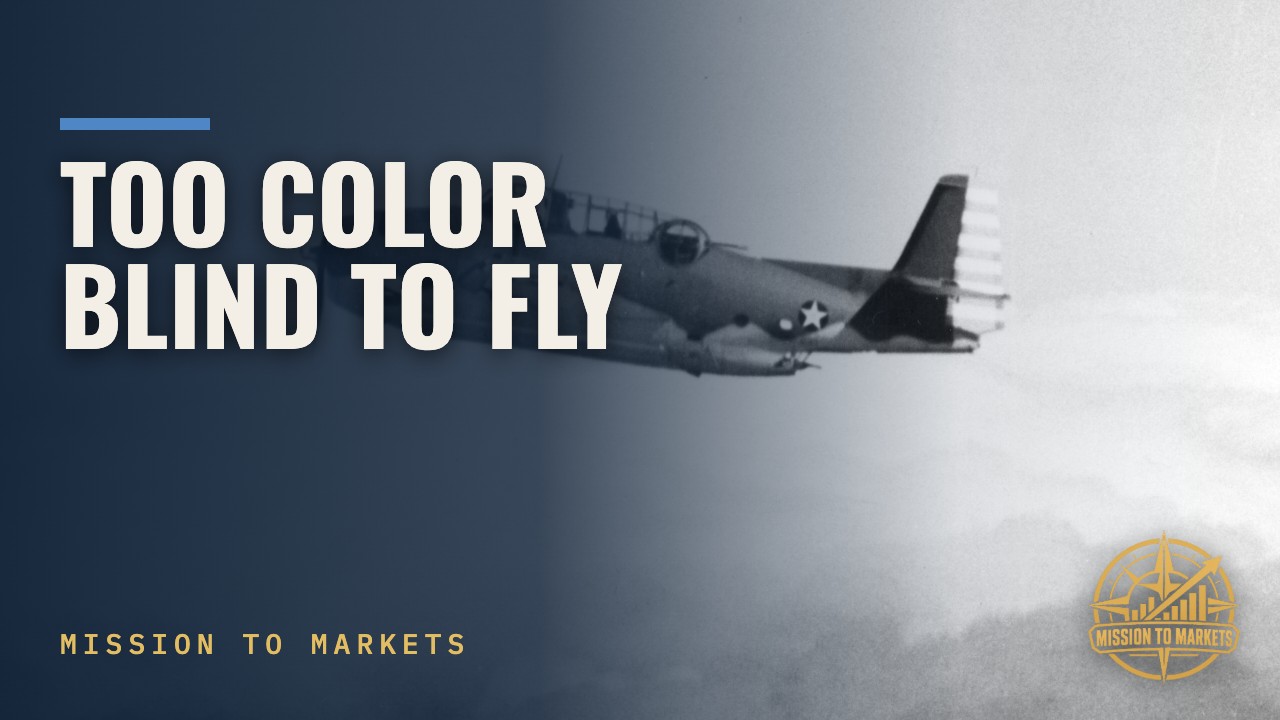
So the Navy made him something else. He trained as a radioman and gunner for torpedo bombers. That meant a seat behind the pilot in a Grumman Avenger, a big, single-engine plane built to fly off carriers and drop torpedoes and bombs. The Avenger carried a crew of three. The pilot flew. The men behind him ran the radio and the guns that guarded the plane from behind. Military.com says Newman flew as a turret gunner.
In 1944 he shipped out to the Pacific. Military.com says he served with squadrons at Naval Air Station Barbers Point, Hawaii, that trained replacement pilots. Then came that ear infection, and the Bunker Hill. Here's the catch: accounts differ on the details. Some say only the pilot was grounded, some say the whole crew. Sources also disagree on which squadron he was in. What they agree on is that the ear infection kept him out of harm's way that day.
By August 1945, Military Times says, he was an aviation radioman third class aboard the escort carrier Hollandia, about five hundred miles off Japan. He was discharged in 1946 and went to college on the GI Bill, the law that paid for veterans' schooling. Kenyon College, class of 1949.
The Problem
Then he became a movie star. That part you know. What you might not know is the friend he met along the way.
A.E. Hotchner, everybody called him Hotch, was a writer best known for "Papa Hemingway," his book about his friend Ernest Hemingway. He and Newman were neighbors in Westport, Connecticut, according to Hotchner's obituary. Around the holidays, the two of them would mix up Newman's homemade salad dressing, pour it into old wine bottles, and hand it out to neighbors while they went Christmas caroling.
That's the problem. Not a big one. Their friends kept asking for more. In December 1980, as Hotchner told it to Vanity Fair, he found Newman in his barn, drinking a beer and mixing dressing. They had more than they could give away.
So they asked a question two amateurs probably shouldn't ask. What if we sold it?
The Plan
The experts had answers. According to a company history published by encyclopedia.com, marketing people told them test marketing would cost four hundred thousand dollars. Test marketing is when you try a product in a few stores first to see if anyone buys it. Newman and Hotchner skipped it. They had friends taste a few samples and pick a favorite.
They put up their own money. That same history says forty thousand dollars each, though other accounts give a smaller figure. They found a bottler. And Newman agreed to put his own face on the label, under a name that was half a wink: Newman's Own.
Then they went to Stew Leonard's, a big grocery store in Norwalk, Connecticut. The history says Stew Leonard took ten thousand cases, and warned Newman not to expect much from a celebrity food.
Here's the plan that made it different. In 1982, the founders decided the profits wouldn't go to them. The Newman's Own Foundation quotes Newman: "Let's give it all away to those who need it!"
What Was at Stake
Think about what Newman was risking. Not his money, really. His name. A famous actor selling salad dressing was an easy joke if the stuff was bad. Marketing experts, the encyclopedia.com history says, forecast about a million dollars in losses the first year.
Instead, the first year made money. How much depends on who you ask. The foundation says more than three hundred thousand dollars. The encyclopedia.com history says nearly five hundred thousand after taxes. A Vanity Fair account says more. Every version agrees on where it went: all of it to charity.
Newman later said, as that history quotes him, "If we'd followed the experts' advice, we'd probably still be bottling dressing in our basement."
The growing wasn't all easy. The company kept adding products: spaghetti sauce, salsa, lemonade, popcorn. Not everything worked. An ice cream line made with Ben and Jerry's was gone by 2000. And the company's own research found that fewer than a quarter of shoppers even knew the profits went to charity, so they redesigned the packaging to say it louder.
But the numbers kept getting better. By 1988, gross sales had reached thirty-six million dollars. In 1989, according to the same history, the company's profit before taxes was sixteen percent of sales, when the food industry average was three point four percent. In 1990, a deal with Burger King doubled the chain's salad dressing sales for the month of July. Back in 1988, Newman and Hotchner had opened the Hole in the Wall Gang Camp in Ashford, Connecticut, a free camp for kids with serious illnesses. The foundation says two hundred eighty-eight children came the first year.
Here's a nod to yesterday's holiday. In 1993, Newman's daughter Nell started an organic line. The New York Times reported, as that history recounts, that she won her father over by cooking him an all-organic Thanksgiving dinner.
How It Turned Out
Paul Newman died on September 26th, 2008, at home in Westport. He left the company to his foundation. That created a problem. Federal rules generally cap a private foundation at twenty percent ownership of a business, according to Nonprofit Quarterly. The IRS gave the foundation extra time. But by 2018, the law firm Loeb and Loeb wrote, the foundation "faced a mandate to divest at least 80 percent" of the company. Then on February 9th, 2018, a narrow fix was signed into law as part of a budget bill. People call it the Newman's Own exception. It lets a foundation own a business outright, as long as the profits go to charity.
Not everyone agreed on how the money should flow. In August 2022, Newman's daughters Susan and Nell sued the foundation in Connecticut, the Associated Press reported. They said their father wanted each of their charities to get four hundred thousand dollars a year, and the foundation had cut that in half. They asked for one point six million dollars, to be given away through their own foundations. The foundation called the suit meritless. We couldn't find a published outcome.
His partner, A.E. Hotchner, died in 2020, at one hundred two.
The company they started on a whim is still giving it all away. The Newman's Own Foundation says it has donated more than six hundred million dollars. And it came back around to the military. Starting in 1999, the Newman's Own Awards have funded groups that help service members and their families, presented at the Pentagon with Fisher House Foundation and Military Times, according to Fisher House.
Three lessons for you.
First, a missed door isn't the end of the hallway. Newman couldn't be a pilot. So he took the rear seat. He didn't get the job he wanted. He got a job, and he did it.
Second, start small and let demand pull you. Nobody begged Newman and Hotchner to start a company. Their neighbors begged them for more dressing. That's the best market research there is, and it was free.
Third, decide what the business is for, early. "Give it all away" wasn't a marketing line they added later. It was the plan from the first year, and it gave every jar on the shelf a reason to exist.
Here's my take. Newman spent his war in the back seat, facing backward, watching for what was coming. Not the glamorous seat. But somebody has to cover the people in front. He spent the rest of his life doing a version of that, putting his famous face on a jar of dressing so the money could cover kids at a summer camp. That's a good use of a name.
If the job you wanted in uniform wasn't the one you got, you're in good company. The seat you end up in can still teach you how to build something that matters.
Monday: a Marine rifleman with a Purple Heart, an internet company down to its last few million, and a Super Bowl ad that changed everything. Because the mission didn't end when the uniform came off. New story every weekday. Subscribe so it's waiting for you. This is Mission to Markets, supported by my company, Parcaut Supply Co. I'm Ed Parcaut. Make it a great day.