
EPISODES / EP 08 ·
Uncle Noname
Famous Amos · Wally Amos
A high school dropout earned his GED in the Air Force, broke a color line at William Morris, built Famous Amos, then lost the right to sell cookies under his own name.
SERVICE U.S. Air Force
Out now. About ten minutes.
THE LESSON / ED'S TAKE
You can lose a company and still keep your word. Whatever you're building, decide now which commitments you'll keep no matter how the business goes.
In this episode
- 0:00Intro
- 1:05Grew Up in the Air Force
- 2:40The Agent
- 3:56Sell It Like a Star
- 5:18Losing the Name
- 7:02Uncle Noname
Read the full transcript
In the early 1990s, Wally Amos started a new cookie company and put his own name on it. That was the problem. Back in 1975, he'd opened what his children later called the world's first cookie store, on Sunset Boulevard in Los Angeles. He called it Famous Amos. By now he'd sold that company off, piece by piece. The new owners sued him for trademark infringement. So the most famous cookie man in America couldn't sell cookies under his own name. He renamed his new company Uncle Noname. And long before any of it, he was a high school dropout in the Air Force.
This is Mission to Markets, where every weekday we tell the true story of a company a veteran built. I'm Ed Parcaut. This episode is narrated with an AI version of my own voice, from a script I approved.
Why this show? I'm a Navy veteran who built businesses, and I kept finding out that companies I grew up with were built by people who'd served. Nobody tells you that part. So every weekday, we will.
Grew Up in the Air Force
Wallace Amos Jr. was born July 1st, 1936, in Tallahassee, Florida. When he was twelve, his parents divorced, and he was sent to live with his aunt, Della Bryant, in Harlem, in New York City. The New York Times and Military.com both describe her as a skilled baker. She made chocolate chip cookies for Wally and his sister.
He went to Food Trades Vocational High School in Manhattan and apprenticed at the Essex House hotel near Central Park. He wanted to cook. But according to the Times, he kept getting passed over for promotion in favor of white students. So he quit school and joined the Air Force.
An Air Force news article from 2007 says he enlisted in 1953 and was stationed at Hickam Air Force Base, in Honolulu, from 1954 to 1957. Another Air Force profile dates his service 1955 to 1959, so the exact years aren't settled. Hickam sits right next to Pearl Harbor, and in those years it was a key stop for military flights across the Pacific. The Times says he spent most of a four-year stint in Hawaii. While he was in, he earned his GED. That's the high school equivalency diploma, for people who didn't finish school. The Air Force and History.com both note it.
He told that Air Force reporter, "I grew up in the Air Force." He said he learned to be responsible, to take care of himself, and what it meant to make a commitment to someone and honor it.
Hold on to that word, commitment. He'd need it.
And hold on to Hawaii, too. He'd be back.
The Agent
After the Air Force, he went back to New York. The Times says he took secretarial classes and was hired in the mail room of the William Morris Agency, one of the biggest talent agencies in show business. A talent agency finds work for performers and negotiates their deals.
He rose. By 1961, the Times reports, he was a junior agent, the first Black person to hold that position at the agency and one of the first in the country. The Air Force's Veterans in Blue profile says he signed Simon and Garfunkel. He worked with acts like the Supremes and Marvin Gaye, and the Times says he put together package tours for Motown acts.
But Military.com says he was passed over for promotions in favor of white colleagues. So he moved to Los Angeles and opened his own management business. It didn't take off the way he hoped. The Times says he spent nearly a decade representing second-tier actors and musicians.
That was the problem. A talented, hardworking man, stuck in a business that wasn't paying off.
To deal with the stress, Military.com says, he baked at night. His aunt's chocolate chip cookies. And people noticed. As History.com quotes him telling the Times in 1975, "pretty soon everybody was asking for them."
Sell It Like a Star
A friend suggested he go into baking, according to the Times. So he did what an agent does. He found backers. In 1975, he got a twenty-five-thousand-dollar investment from Marvin Gaye, the singer Helen Reddy, and a few others. He leased a small building on the eastern end of Sunset Boulevard.
Here's the clever part. Military.com says he marketed the cookies under the name Famous Amos the way he'd promote a music act. The cookie was the talent. He was the manager, and he made himself the face. His signature straw hat ended up in the Smithsonian.
History.com says the grand opening was a star-studded party with fifteen hundred people. The store sold cookies by the pound, in flavors like chocolate chip with pecans. His son Shawn stood on milk crates to work the register while his dad worked the back.
It worked. According to History.com and the Times, the first store did three hundred thousand dollars in its first year. By the early 1980s, Famous Amos was a twelve-million-dollar business, with dozens of stores, packaged cookies in supermarkets, and a spot in Bloomingdale's. History.com says he rode in the Macy's Thanksgiving Day Parade from 1977 to 1981.
A high school dropout from Harlem had built a national brand on a family recipe and his own smile.
Losing the Name
Then it came apart. Slowly at first.
History.com says that in 1985, Famous Amos lost three hundred thousand dollars on ten million in sales. He kept raising money by selling pieces of the company, and each time, his share got smaller. That's called dilution: when new owners buy in, the slice you own shrinks. History.com says that in 1985 he sold a majority stake to Bass Brothers Enterprises for one point one million dollars. The Times says that in 1988 he sold what was left to a private equity firm, the Shansby Group, for three million. He stayed on as a paid spokesman for a year, then left.
He was honest about why. He told the Times in 1999, "I didn't use to listen to people a lot because I was Famous Amos." And History.com quotes him saying he "didn't realize I had sold my future along with it."
Here's the cruel twist. The Times says that in 1991 he started a new cookie company, Wally Amos Presents. The owners of Famous Amos sued him for trademark infringement. A trademark is a name or logo the law says belongs to a business. History.com says he was barred from using his own name and likeness. So he renamed his company Uncle Noname. After two years in court, the Times says, the two sides agreed he could call himself Uncle Wally, as long as he didn't sell cookies. So he sold muffins.
Uncle Noname filed for bankruptcy in 1996. Meanwhile the company with his name on it kept changing hands, and History.com says it sold in 1992 for sixty-one million dollars. That's more than fifty times what he got for control of it.
Uncle Noname
So what happened to Wally Amos? He went back to the place the Air Force had shown him. The AP says he moved to Hawaii in 1977 and made it his home. The Uncle Wally's muffin brand reached about five thousand stores, the Times says, before he sold his part.
Then, in 1999, his old company called. Keebler now owned Famous Amos, and the Honolulu Star-Bulletin reported it signed him to a multi-year deal as a spokesman. History.com says he agreed only if they brought the recipe closer to the original. His son Shawn told History.com, "It was bittersweet." Amos was back on his own brand, but as a paid spokesman, and he soon left for good.
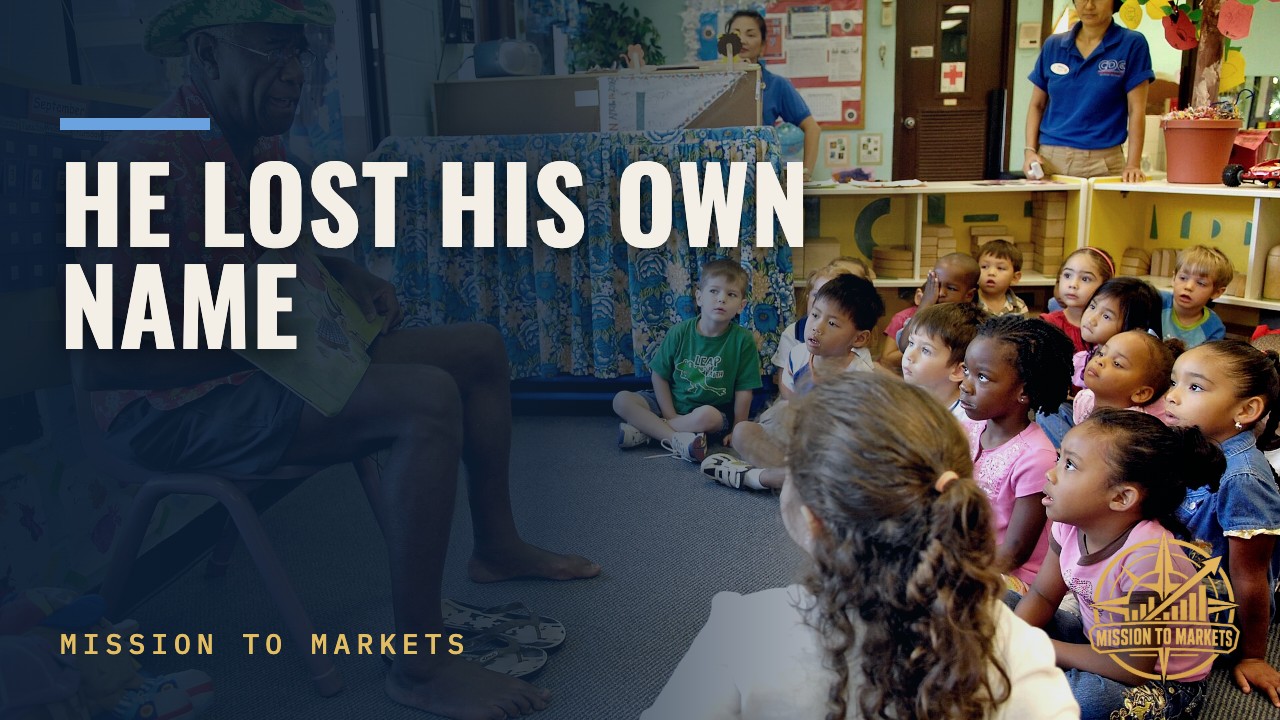
He opened a small cookie shop near his home in Honolulu, kept a room full of children's books, and read to kids for hours every Saturday. He'd hosted a public television show called Learn to Read back in 1987, and President George H. W. Bush honored his literacy work in 1991. He kept trying in cookies, too. He pitched a brand called Cookie Kahuna on Shark Tank in 2016, and the investors passed.
He died at home in Honolulu on August 13th, 2024, at eighty-eight. Being famous, he told the AP in 2007, "is highly overrated anyway."
Three lessons.
One. Your name is an asset. Protect it like one. Amos built a brand on his own face and name, then sold the company that owned them. Before you sell, know exactly what you're selling, including the right to be you in business.
Two. Listen. Amos said it himself: he lost the company partly because he didn't listen. The traits that start a company, confidence and showmanship, can sink it if nobody's allowed to tell you no.
Three. You can lose the business and keep the mission. He lost Famous Amos. He didn't lose the kid who learned to bake in Harlem, or the airman who learned about commitment in Hawaii.
Here's my take, for you, building something of your own. Wally Amos dropped out of high school, earned his GED in the Air Force, broke a color line at a talent agency, and opened what his family called the world's first cookie store. Then he lost it, and his name with it. And he still showed up every Saturday to read to kids. You can lose a company and still keep your word. Whatever you're building, decide now which commitments you'll keep no matter how the business goes.
Monday: the sneaker giant whose two founders both wore Army green. Because the mission didn't end when the uniform came off. New story every weekday. Subscribe so it's waiting for you. This is Mission to Markets, supported by my company, Parcaut Supply Co. I'm Ed Parcaut. Make it a great day.